When invasive insects or rodents breach residential foundations, reliable pest control services Greensboro homeowners depend on restore baseline indoor safety through scientific nest location and physical exclusion. Operating across Guilford County, initial on-site inspections identify moisture pockets and crawl space conduits where pests aggregate before establishing populations indoors.

Pest control services Greensboro is a residential and commercial sanitization and perimeter management practice that eradicates active biological infestations and seals structural entry points across Piedmont properties.
Every service reflects the same meticulous attention to detail, whether it's a single job or a larger pest control services project across Greensboro.
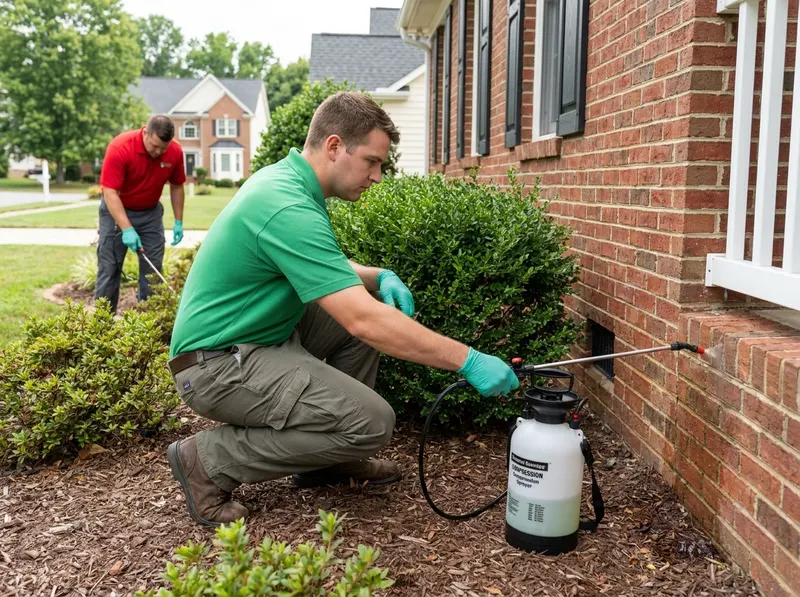
Perimeter barrier applications create an impenetrable micro-encapsulated shield extending 3 feet up the exterior foundation masonry and 5 feet outward across surrounding soil bands. The clinical-grade compound bonds to exterior brick, crawl space vent skirts, and concrete walkways to intercept crawling insects like American cockroaches, field crickets, and odorous house ants before they encounter indoor thresholds. Technicians sweep exterior soffits and downspouts clear of cobwebs, wasp starts, and structural debris using specialized non-abrasive extension poles prior to product deployment. Foundation weep holes receive fine micro-dust injections using natural amorphous silica compounds that compromise the external epicuticle of crawling insects without emitting airborne solvents. By targeting exterior foundation perimeter points, this application halts structural ingress while keeping chemical exposure outside interior living spaces. Routine maintenance applications every 90 days sustain continuous defensive boundaries across varying weather conditions, including Piedmont spring downpours and humid midsummer dry spells.
Get a quote →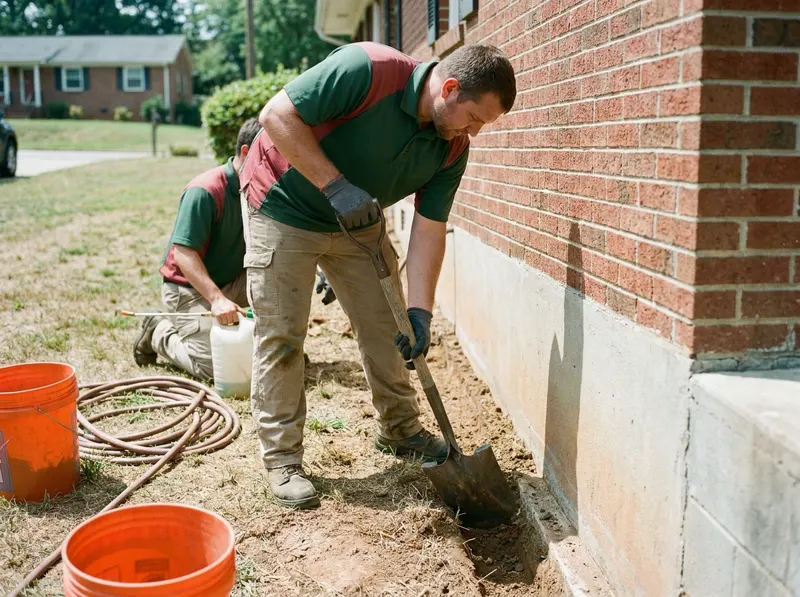
Subterranean termite management requires trenching foundation perimeters down to footing levels, displacing red clay soil to inject non-repellent liquid termiticides. Foraging workers traverse this treated zone without detection, transferring the active non-repellent agent back to subterranean queens through social grooming and trophallaxis. This complete colony eradication method protects structural sills and wood framing from hollow honeycombing without tearing apart finished interior drywall or subfloors. The technical protocol involves excavating a continuous 6-inch by 6-inch trench immediately adjacent to brick foundation walls, followed by calibrated pressure rod injections spaced 12 inches apart to saturate subsoil deposits. Expansion joints between concrete slabs, patio aprons, and garage footings undergo precision diamond drilling at 12-inch intervals to inject protective solutions directly beneath the structural concrete pad. Technicians then backfill the excavated earth, blending it with termiticide to establish an unbroken chemical defense envelope that remains fully lethal to subterranean workers for a verified 5 to 10 years without requiring annual re-trenching.
Get a quote →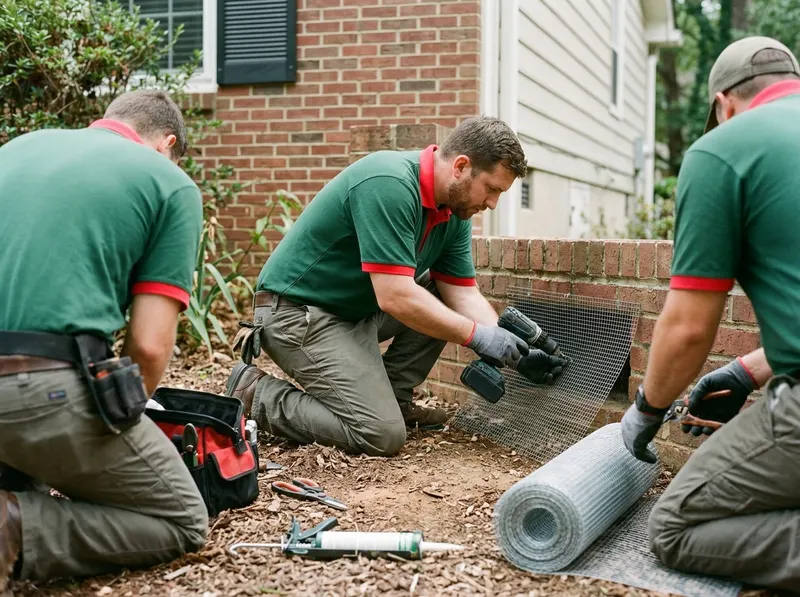
Crawl space rodent exclusion terminates attic and floor cavity nesting by sealing foundation vents, pipe entryways, and rim joist voids with 1/4-inch galvanized steel wire mesh and elastomeric expanding foam. Technicians map every entry point larger than a dime, physically barring Norway rats and house mice from warm wall voids. Once access routes are blocked, interior spring traps eliminate remaining trapped pests, restoring indoor sanitary conditions without decaying carcasses trapped behind drywall. Damaged fiberglass batt insulation contaminated with rodent urine and droppings is extracted under HEPA containment to prevent bio-aerosol drift through subfloor heating registers. Technicians apply botanical sanitizing mists directly onto exposed wood floor joists and subflooring to break pheromone scent markers that attract foraging outdoor rodents. Foundation vent screens damaged by persistent gnawing are retrofitted with custom-cut 19-gauge steel hardware cloth secured with masonry concrete screws. This comprehensive structural reinforcement isolates the living environment permanently from outdoor rodent runways.
Get a quote →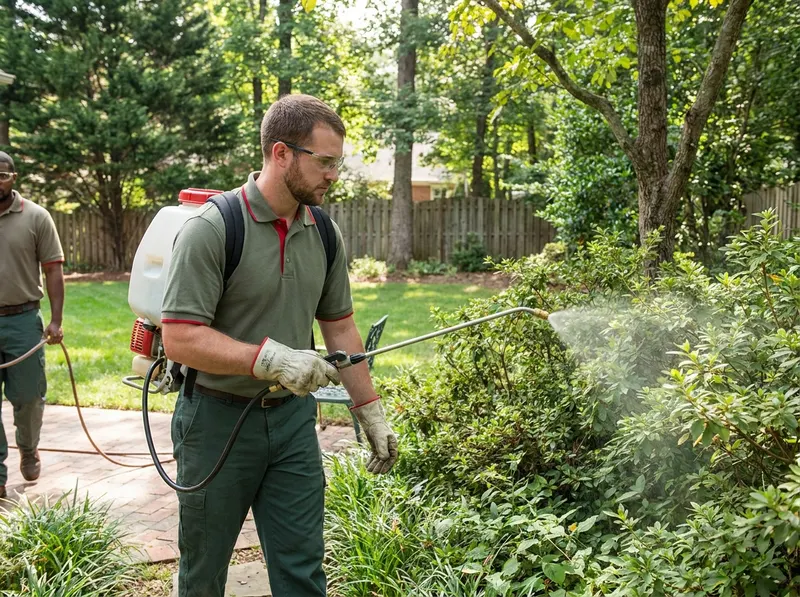
Foliage treatments target daytime resting zones on the underside of broadleaf shrubs, tree canopies, and tall grasses where adult mosquitoes harbor. Micro-fine mist applications deposit weather-resistant polymer compounds that adhere directly to leaf undersides without washing off in moderate rain showers. Paired with Bacillus thuringiensis israelensis biological dunks placed in standing water basins, this treatment breaks the 7-to-10 day adult reproductive cycle throughout warm seasons. Applications systematically cover perimeter foliage bands up to 10 feet in height, targeting shaded property zones beneath mature dogwoods, maples, and dense evergreen hedges. Storm drainage swales, landscape catch basins, and unpaved French drain lines receive specialized microbial briquettes that dissolve slowly over 30 days, neutralizing active mosquito larvae within 24 hours of hatching. Routine suppression cycles preserve outdoor living spaces around porches and garden lawns from invasive Asian tiger mosquitoes throughout peak humid months.
Get a quote →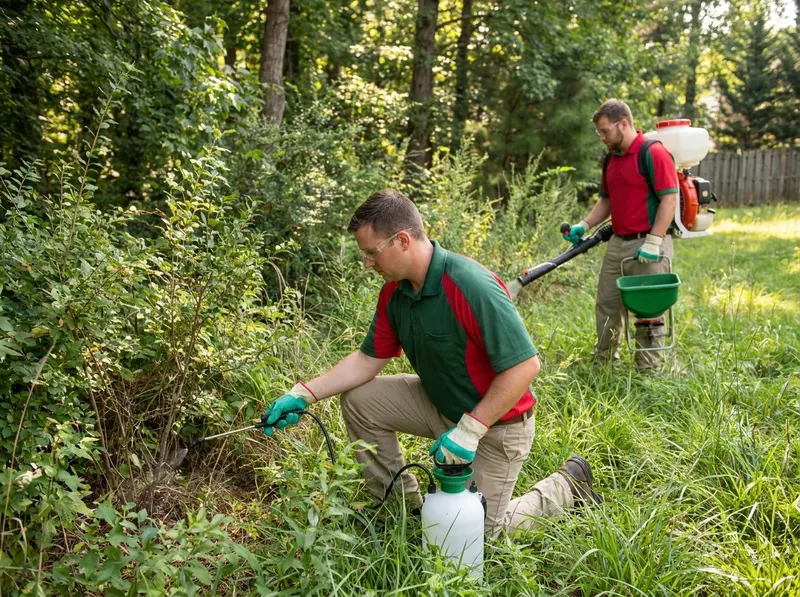
Tick suppression targets woodland edges, leaf litter boundaries, and shaded ornamental groundcover where blacklegged ticks and lone star ticks wait for passing hosts. Granular perimeter treatments form a continuous defensive band across property transition zones, neutralizing questing ticks before they move onto residential lawns or family dogs. Combining granular ground applications with low-pressure liquid sprays eliminates localized nymph and adult tick reservoirs. Technicians identify high-risk property margins bordering unmaintained brush, applying low-impact synthetic pyrethroid granules calibrated at 2 to 3 pounds per 1,000 square feet using precision mechanical broadcast spreaders. Shaded ground covers like pachysandra, English ivy, and hardwood mulch beds receive directed low-pressure liquid drenches that penetrate beneath damp surface layers where tick nymphs seek shelter during hot afternoon hours. Eliminating these moisture-retaining tick refuges protects domestic pets and families from tick-borne pathogens throughout the active questing season from early spring through late autumn.
Get a quote →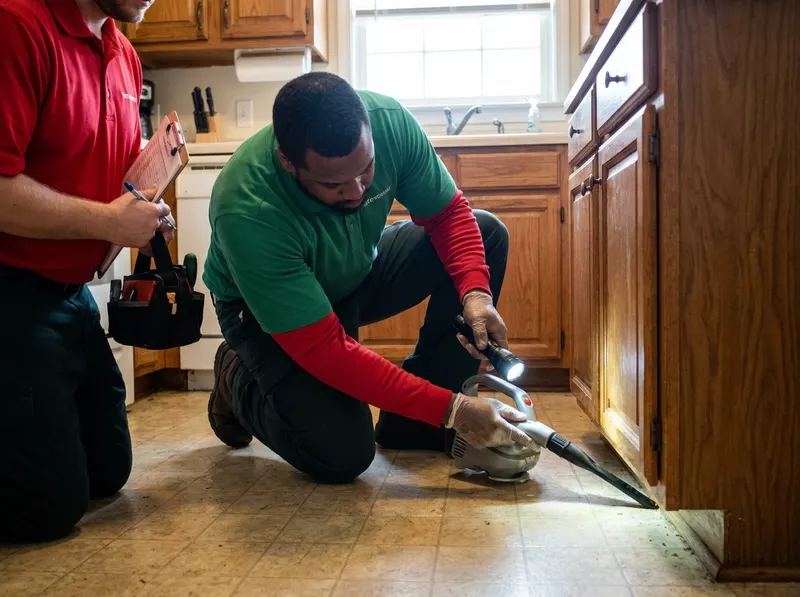
Severe interior roach infestations require pinpoint crack-and-crevice baiting using insect growth regulators and high-viscosity biological attractants inside motor housings, under sink cabinets, and behind baseboards. These precision compounds disrupt chitin synthesis in juvenile roaches, halting their molting cycles and reproductive capacity permanently. Specialized HEPA-filtered vacuum extraction physically removes aggregation clusters, cast skins, and allergens, restoring pure air quality inside food-prep zones. Vacuuming directly behind warm refrigerator compressors and dishwasher kickplates removes hundreds of active roaches and egg cases instantly, immediately reducing reproductive pressure by up to 70% during the initial visit. Technicians place microscopic bait beads inside hinge recesses, plumbing escutcheon plates, and electrical junction boxes, avoiding exposure to domestic dishware and food preparation counters. Follow-up visits at 14 and 28 days introduce alternate attractant chemistry matrices to bypass behavioral bait aversion, systematically collapsing remaining aggregation clusters until indoor populations reach absolute zero.
Get a quote →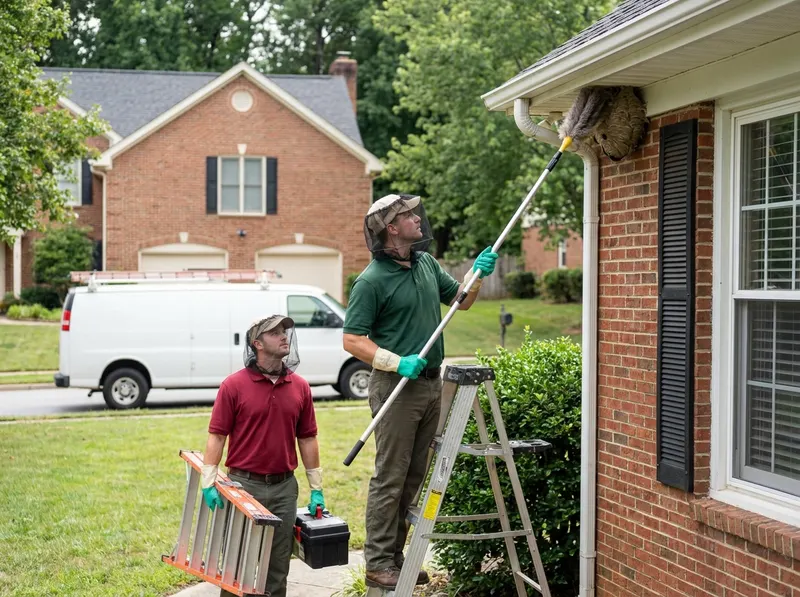
Under-eave wasp nests, underground yellowjacket burrows, and baldfaced hornet aerial enclosures demand targeted non-aerosol freezing agents or residual dust applications delivered under defensive enclosures. Technicians eliminate aggressive colonies during low-activity twilight hours, neutralizing aerial defense patterns before physically scraping away papery mud nests and subterranean tunnels. The treatment site is then coated with a residual deterrent to stop replacement queens from rebuilding in identical roof peaks. When addressing subterranean yellowjacket colonies nestled in lawn cavities or root balls, low-pressure mechanical dusting wands inject micro-pulverized permethrin dust deep into internal brood chambers, extinguishing defensive counter-attacks within minutes. Overhead eave nests are detached using heavy telescoping scrapers, followed by an application of micro-encapsulated repellents across architectural overhangs and dormers to deter roving paper wasp queens from constructing new nursery combs during spring warming cycles.
Get a quote →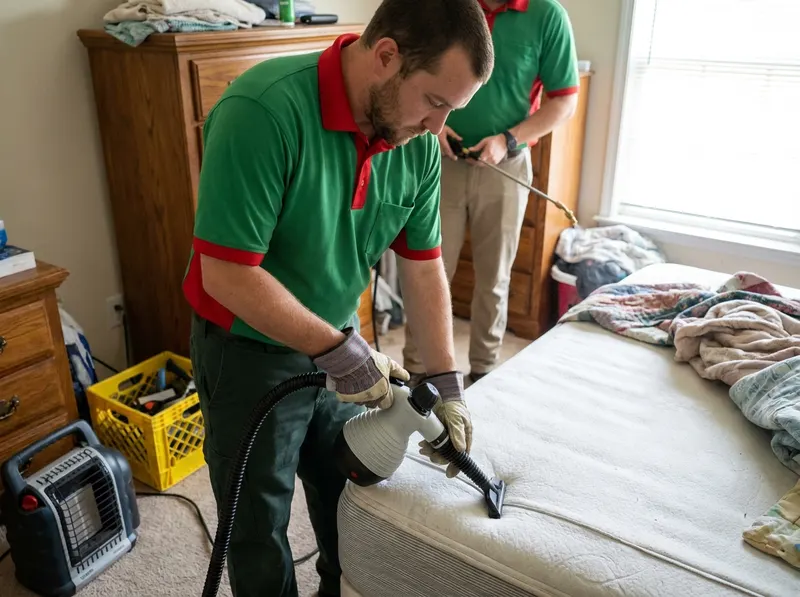
Eliminating indoor bed bug harborages involves combining specialized steam heat penetration of box springs and mattress piping with target-specific desiccant dust applications within electrical boxes and hollow bed frames. The physical drying agent compromises the waxy protective cuticle of both adult bugs and newly hatched nymphs on contact. This method avoids volatile airborne residues, allowing bedrooms to be re-occupied safely once the physical eradication cycle concludes. High-temperature dry steam wands exceeding 212 degrees Fahrenheit penetrate 2 inches into tufted mattress seams, upholstered furniture frames, and carpet tack strips, instantly denaturing heat-sensitive bed bug proteins and unhatched eggs. Technicians remove electrical wall plate covers to deliver micronized amorphous silica dust directly into interior stud cavities, forming permanent desiccating zones that remain active against wandering bed bugs indefinitely. Follow-up visual inspections at 21 days utilize high-intensity ultraviolet illumination to confirm zero egg hatching or crawling activity.
Get a quote →You get a firm, itemized quote for your pest control services before any work begins, no surprises, no pressure.
Careful prep, tidy work, and a full cleanup when we are done. We treat your home and belongings like our own.
The same trusted, background-checked team from the first call to the final check.
Selecting appropriate pest defense protocols requires balancing structural invasion severity against property environmental factors. If an infestation involves subterranean insects penetrating structural framing beneath baseboards or band sills, choose complete liquid trenching or sub-slab borate treatments rather than superficial baseboard spraying. Trenching establishes a continuous soil barrier down to foundation footings, whereas interior aerosol treatments merely disperse foraging worker insects deeper into wall cavities.
Sub-slab injection targets colonies hidden beneath finished garage pads or front entry stoops, delivering 4 gallons of non-repellent liquid termiticide per 10 linear feet directly into the gravel bedding layer where subterranean workers construct exploratory shelter tubes. If property challenges stem from recurring outdoor biting pests near damp Piedmont hardwoods, select cyclical micro-encapsulated foliage treatments paired with standing water microbial larvicides. The operational trade-off centers on treatment persistence: botanical pyrethrin mists degrade within 14 to 21 days under direct UV exposure and heavy summer rains, requiring frequent reapplications, whereas synthetic pyrethroids bound with microscopic polymers maintain residual surface efficacy for up to 60 days on shaded brick and wood siding.
If structural breaches involve commensal rodents entering attic insulation, invest in physical metal-flashing exclusion rather than repetitive anticoagulant bait stations. Metal exclusion permanently eliminates entry channels across attic dormers, roof returns, and foundation sill plates, whereas chemical baiting alone leaves the building envelope vulnerable to new rodent litters entering from nearby wooded lots. When addressing crawl space humidity combined with moisture-loving arthropods like camel crickets or wood-boring beetles, choose heavy 12-mil vapor barrier encapsulation over localized dusting.
Encapsulation isolates raw ground soil evaporation completely, depriving damp-wood pests of necessary air humidity, whereas topical dust applications provide temporary insect mortality without resolving the ambient moisture reservoir driving recurring invasions. For chronic German cockroach colonizations inside kitchen cabinetry, select targeted insect growth regulator gel placements over broad broadcast thermal fogging. Broad fogging disperses adult cockroaches into adjoining bedrooms and ceilings, whereas slow-acting bait matrices allow foraging nymphs and reproductive females to consume active hydramethylnon or dinotefuran directly within inaccessible cabinet wall chases, achieving total nest termination within 14 to 28 days without airborne chemical residue settling on residential food preparation counters.
Every project gets a firm, written price after a free on-site visit. Ranges below for orientation.
Tell us about your pest control services job and we'll send a clear, written quote, usually the same day. Or just call and talk to a real Greensboro pro.
(743) 229-3686
Greensboro sits squarely on dense Carolina red clay soils within Guilford County, creating substantial moisture-retention challenges around residential crawl spaces. Neighborhoods featuring aged oak and willow canopies, such as Westerwood, Irving Park, and Latham Park, regularly channel high humidity under historic floor joists, encouraging wood-boring subterranean termites and Smokybrown roaches to seek structural refuge during seasonal transitions. Properties flanking the lake systems of Hamilton Lakes or low drainage zones near Tanger Family Bicentennial Garden encounter aggressive mosquito emergence starting every April, necessitating targeted mechanical water abatement alongside botanical perimeter defense. The local climate features long, humid summers with average humidity levels exceeding 75% between June and September, accelerating the reproductive cycles of domestic pests across both older pier-and-beam foundations and modern concrete slab builds. Along roads like West Friendly Avenue, North Elm Street, and Battleground Avenue, mature hardwood root systems frequently expand against older brick foundations, creating micro-fissures that allow Odorous House ants and Norway rats to enter wall cavities during autumn cold snaps. In areas near Guilford Courthouse National Military Park and the Greensboro Science Center, properties frequently adjoin dense woodland margins, generating elevated tick activity from spring through late fall. Red clay soils throughout Starmount Forest and Sedgefield retain heavy ground moisture following intense seasonal thunderstorms, swelling against foundation sills and preventing sub-surface water runoff. This structural moisture build-up softens subflooring framing, drawing in wood-boring carpenter ants and fungus beetles that thrive in dark, humid crawl spaces. Addressing these localized ecological pressures demands foundational knowledge of Piedmont architectural styles, from mid-century crawl spaces in Lindley Park to expansive contemporary floorplans across Adams Farm. Mechanical exclusion protocols tailored to local construction practices permanently bar pests from structural access points while preserving natural indoor air purity.
Free estimates for Greensboro & the surrounding area.
 CleanNest Pest Management